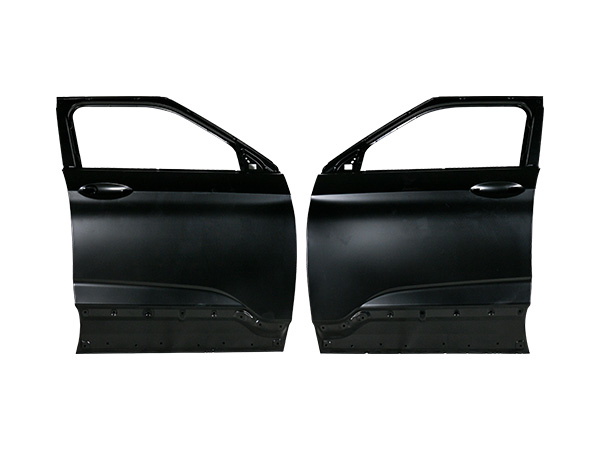
Automotive component assembly is a core stage in vehicle manufacturing; the precision and standardization of this process directly determine the vehicle's safety, reliability, longevity, and user experience. Although the industry mandates clear requirements for assembly workflows and standards, various issues frequently arise during actual production, necessitating targeted troubleshooting and control measures.
I. Defects in Component Mating Precision
Components of the same specification often exhibit dimensional or geometric tolerance deviations due to variations between supplier batches or lapses in quality control. For instance, misaligned bolt holes in sheet metal body panels prevent proper alignment during assembly; forced assembly creates residual stress, which can lead to component deformation over time. Excessive cross-sectional tolerances in rubber weatherstripping prevent a continuous seal when installed in doors, making them prone to leakage during rain. Dimensional deviations in plastic clips can cause looseness and rattling noises, or—in severe cases—lead to breakage during forced installation, significantly increasing the rate of post-sales rework.
II. Deviations in Process Parameter Execution
Strict adherence to process parameters during assembly is the foundation of quality; however, actual production often sees deviations caused by human error or tooling failure. A classic example is bolt torque control: some operators rely on "feel" rather than precise tools. Insufficient torque leads to loose connections—such as wheel bolts coming loose at high speeds, posing a serious safety risk—while excessive torque can snap bolts or strip threads. Torque discrepancies directly compromise sealing and structural integrity, particularly when assembling critical components like engine blocks and steering knuckles. Furthermore, issues such as inadequate or uneven sealant application and spot-welding currents deviating from standard values can result in poor body sealing and substandard weld strength.
III. Violations of Assembly Sequence and Workflow
Component assembly requires strict adherence to established process workflows; procedural violations can easily lead to either latent or overt defects. For instance, regarding the assembly of high-voltage wiring harnesses in new energy vehicles, if the routing haphazardly bypasses high-temperature components like the exhaust pipe, long-term friction can wear through the insulation, creating a risk of short circuits. In drivetrain assembly, an incorrect sequence for half-shaft installation can lead to abnormal bearing clearance, resulting in unusual noises or binding during power transmission. Similarly, incorrect assembly sequences for interior components—such as dashboards or door panels—can cause uneven gaps and persistent rattling over bumps, severely detracting from the user experience.
IV. Hardware Damage and Latent Defects During the Process
Improper handling during assembly often causes component damage, manifesting as either visible cosmetic flaws or latent functional defects. Visible damage—such as scratches on sheet metal, bumper deformation, or warped edges on interior trim—directly impacts the vehicle's perceived quality. Latent defects, however, are more hazardous: for example, failing to implement electrostatic protection when installing an Electronic Control Unit (ECU) can lead to chip failure caused by electrostatic discharge—a problem that may not surface until the vehicle has been in use for months. Likewise, metal shavings left behind during engine assembly can circulate with the engine oil, abrading cylinder walls and pistons, which leads to issues like premature oil consumption and power loss.
V. Lack of Control Over Assembly Environment and Cleanliness
The cleanliness of the workshop environment directly affects the lifespan of core components, particularly during the assembly of powertrain and braking systems. If dust-removal protocols are not strictly enforced at assembly stations, residual iron filings inside the engine block or dust and impurities in fluid lines can cause malfunctions such as brake binding or fuel injector clogging. Furthermore, fibers or dust left behind during the assembly of the air conditioning system can be blown into the cabin, compromising indoor air quality.
The root causes of automotive component assembly issues span multiple dimensions, including upstream quality control, process design, personnel adherence to standards, and in-process inspection. Addressing these problems requires strengthening tolerance controls within the supply chain, optimizing error-proofing designs, enhancing personnel training, and establishing real-time, end-to-end inspection mechanisms to mitigate assembly risks at the source.



 WhatsApp
 Phone
Phone Email
Email Message
Comment
(0)