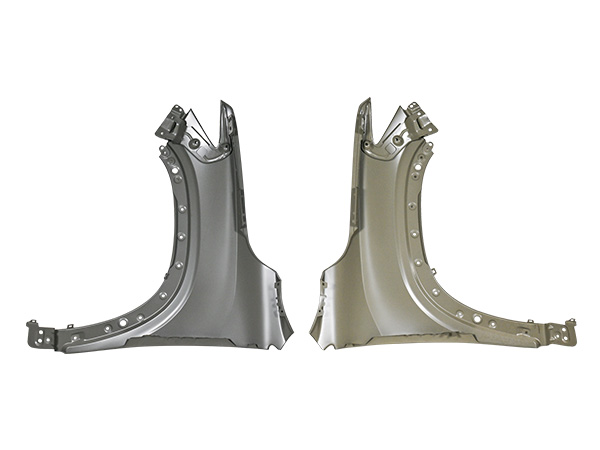
For small and medium-sized automakers, the ability to procure stamped parts that balance consistent quality with cost control is a critical factor determining market competitiveness, especially given their constraints regarding capital, production capacity, and supply chain leverage. As stamped parts constitute core elements of the vehicle structure (e.g., longitudinal and transverse beams) and body panels (e.g., fenders and doors)—directly impacting both safety and manufacturing costs—procurement strategies must be formulated through a lens of end-to-end process collaboration.
First, standardization planning during the design phase is the starting point for cost-effective procurement. Small and medium-sized automakers should adopt "standardization and modularity" principles early in the design process to minimize the number of unique, model-specific stamped parts. For multiple models sharing the same platform, priority should be given to parts compatible with shared production lines; unifying specifications helps reduce mold development costs and supplier inventory pressure. Simultaneously, simplifying the structural complexity of parts—by avoiding excessive irregular surfaces or intricate perforation requirements—reduces manufacturing difficulty and raw material waste, thereby eliminating unnecessary costs at the source. For instance, standardizing door frame specifications across two models from the same brand allows for the shared use of a single mold set and enables suppliers to achieve economies of scale, further lowering the per-unit cost.
Second, supplier selection should align with the automaker's specific scale and needs rather than blindly targeting industry giants. Leading suppliers often neglect service responsiveness for the smaller order volumes typical of these automakers. In contrast, medium-sized or specialized suppliers—who focus deeply on specific product categories—often possess the flexible capacity required for small-batch production. They offer greater agility in process adjustments and customization, while providing targeted quality assurance tailored to specific product characteristics. During selection, priority must be given to verifying automotive quality system certifications, in-line inspection capabilities for critical processes, and historical defect rates for similar products. "Delivery stability" and "quality compliance" should be core evaluation criteria to prevent production line shutdowns caused by defective parts or delayed deliveries from low-cost suppliers.
Furthermore, cost reduction and efficiency gains should be achieved through collaborative process optimization rather than simply squeezing unit purchase prices. Small and medium-sized automakers can collaborate with suppliers to research lightweighting and material substitution for stamped parts—such as replacing standard cold-rolled steel with high-strength, lightweight steel. Although the unit material cost may rise slightly, the use of thinner sheets reduces material waste during stamping and lowers the vehicle's curb weight; this subsequently cuts energy consumption and user operating costs, creating a cost-performance advantage over the vehicle's entire lifecycle. Furthermore, during the small-batch validation phase, companies can prioritize rapid tooling or simplified molds for trial production to avoid the high costs associated with traditional precision stamping dies, switching to mass-production tooling only after the vehicle design is finalized, thereby balancing early-stage R&D risks with cost control.
Establishing long-term, stable supply chain partnerships is also crucial. Small and medium-sized automakers can secure price concessions and priority service from suppliers by committing to volume orders for core stamped parts, thereby reducing the communication costs and quality fluctuations often caused by frequently changing suppliers. Simultaneously, implementing real-time data-sharing mechanisms with core suppliers—covering metrics such as dimensional inspection data and production schedules—enables both parties to rapidly troubleshoot issues, shorten quality rectification cycles, and lower after-sales costs.
In summary, the procurement of cost-effective stamped parts by small and medium-sized automakers represents a fundamental shift from a "price-centric" approach to a "total-process value" approach. By implementing design-stage standardization, precise supplier matching, collaborative process optimization, and long-term supply chain partnerships, these companies can strike a balance between quality, cost, and delivery within budget constraints, laying a solid foundation for the vehicle's market launch.



 WhatsApp
 Phone
Phone Email
Email Message
Comment
(0)