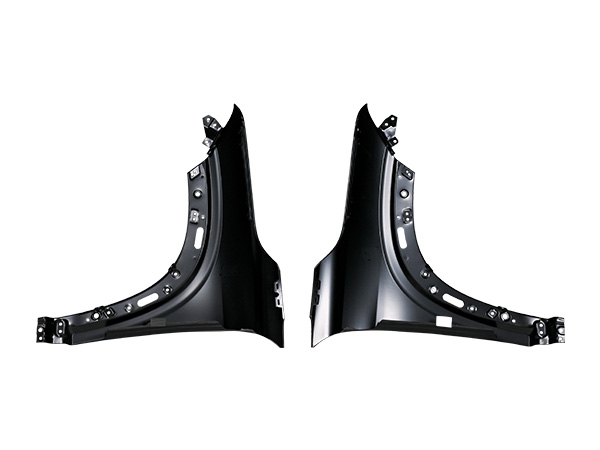
As core foundational components in vehicle manufacturing, automotive stamped parts are widely used in body panels, structural components, chassis parts, and powertrain components; consequently, the industry's trajectory is deeply intertwined with the transformation of the automotive sector. By 2026, driven by the deepening transition to electrification, a surge in demand for lightweighting, and the refined restructuring of supply chains, the automotive stamped parts industry is experiencing simultaneous scale expansion, technological upgrading, and shifts in market concentration. Understanding the current state of this industry is crucial for grasping the dynamics linking upstream materials, midstream manufacturing processes, and downstream vehicle assembly requirements.
I. Current Market Size and Demand Structure
The global automotive stamped parts market reached approximately $184 billion in 2025, a year-on-year increase of 6.3%. It is projected to grow to $265 billion by 2030, with a compound annual growth rate (CAGR) of approximately 7.8% between 2025 and 2030. As a major center for both production and consumption, China’s market size stood at approximately $68 billion in 2025—accounting for 37% of the global total—with stamped parts for new energy vehicles (NEVs) reaching $26 billion and representing 38.2% of the overall market. The domestic market for metal stamped parts for passenger vehicles reached RMB 282.436 billion in 2025 (up 6.27% year-on-year), with a production volume of 44.18 billion units and a demand volume of 40.31 billion units. Other sources indicate that the domestic market size exceeded RMB 320 billion in 2025, with NEV-related stamped parts accounting for 38.2% and lightweight stamped parts growing at an annual rate exceeding 15%; meanwhile, some statistics place the domestic market size above RMB 180 billion, with NEV-specific stamped parts exceeding 35% of the total. While these varying figures stem from differences in statistical scope, they all point to a steady upward trend in total demand.
Regarding the demand structure, the four major categories—body panels, structural components, chassis parts, and powertrain components—account for 32%, 28%, 24%, and 16% of global demand, respectively. New energy vehicles (NEVs) utilize approximately 8% more stamped parts per vehicle than internal combustion engine vehicles; while the weight of these parts is 15% lower, their value per vehicle is 22% higher, primarily due to the use of aluminum and ultra-high-strength steel.
II. Current Status of Technological Iteration and Process Upgrades
The automotive stamped parts industry is currently characterized by rising technical standards and a shift in manufacturing processes. Traditional stamped parts are mostly made from ordinary carbon steel with a tensile strength below 300 MPa; however, by 2026, mainstream automakers will require key structural components to have a strength exceeding 700 MPa, with some battery tray frames and crash beams necessitating ultra-high-strength steel exceeding 1000 MPa. While cold stamping remains the mainstream method due to its high efficiency and precision, hot stamping is emerging as a key trend driven by the need for enhanced safety and lightweighting.
In terms of equipment, companies possessing large-scale stamping lines (2,000 tons or greater) and supporting automated inspection systems are a scarce resource. Servo presses paired with high-precision molds allow for tolerance control within 0.01 mm; robotic stamping systems boost productivity by 32%, while AI-based inspection reduces defect rates by 19%. Due to their superior lightweighting efficiency, the global adoption of aluminum alloy stamped parts has grown by 47%, with the domestic market expanding at a rate of 14.6%—the fastest among the three major material categories.
III. Competitive Landscape and Market Concentration
The industry is characterized by a "large market, small companies" structure. In 2024, the domestic market for automotive stamped parts was valued at approximately RMB 260 billion, yet the top five players (CR5) held a market share of only 9.5% amidst thousands of participants. The passenger vehicle metal stamping sector is also relatively fragmented, comprising three categories: foreign-invested and joint-venture enterprises, large domestic private manufacturers, and numerous small and medium-sized enterprises (SMEs). SMEs generally face challenges such as limited customer acquisition channels and severe product homogenization; indeed, they account for over 90% of the more than 10,000 stamping enterprises nationwide.
The NEV era has shortened supply chains and compressed R&D cycles to 2–3 years, raising the bar for rapid supplier response, the financial capacity to establish local production facilities, and the ability to achieve cost reductions through scale. Consequently, market concentration among leading enterprises is expected to rise gradually. The top five global benchmark enterprises hold approximately a 31% market share, while the top ten in China account for about 28%; the CR10 (concentration ratio of the top ten firms) has risen by 4.3 percentage points since 2020.
IV. Compliance Thresholds and Supply Chain Restructuring
Strengthening compliance systems is a critical aspect of the current landscape. By 2026, mainstream domestic automakers will incorporate IATF 16949 and ISO 14001 certifications as mandatory criteria for supplier entry, while the implementation of the "Golden Tax Phase IV" system makes tax and labor compliance key evaluation factors. Enterprises lacking these certifications struggle to enter core supply chains.
Supply-demand restructuring is characterized by the following: New Energy Vehicle (NEV) manufacturers demand high levels of customization, short delivery times, and complex specifications. Traditional internal combustion engine (ICE) automakers strictly control costs, resulting in clear market stratification: enterprises with comprehensive manufacturing capabilities and compliance credentials occupy the mid-to-high-end market, while those with limited capabilities are being phased out. Regarding regional clusters, the Yangtze River Delta, Pearl River Delta, and central-western regions account for 73% of domestic production capacity, while the Beijing-Tianjin-Hebei region hosts a large number of scaled enterprises, leveraging its deep industrial foundation.
V. Pain Points and Cost Volatility
Industry pain points are pronounced: SME profits are squeezed by raw material price fluctuations, with steel costs accounting for 70% to 80% of the total cost of stamped parts. In 2024, 41% of global stamping plants were affected by raw material price volatility, and 26% by mold costs. Additionally, SMEs face constraints such as lost business opportunities due to information asymmetry and weak bargaining power caused by pressure for annual price reductions.
VI. Future Trends and Outlook
Extrapolating from the current situation, the industry is evolving toward high-end technology, automated production, and integrated services. Market concentration continues to rise, and M&A activity is accelerating. Technological and material innovation—such as the use of high-strength steel and lightweight aluminum alloys—has become a key competitive driver. The risk of integrated die-casting displacing traditional stamping is pushing operational models to shift toward "stamping + welding + assembly" delivery systems.
In summary, the current state of the automotive stamping industry can be characterized as follows: total market volume is expanding globally and in China, with a surging share for NEVs; technical barriers are rising due to demands for higher strength and lightweighting; market concentration remains relatively low but consolidation has begun; and compliance and automation capabilities are acting as key differentiators. Understanding this landscape helps stakeholders across the supply chain position themselves effectively amidst these transformations.



 WhatsApp
 Phone
Phone Email
Email Message
Comment
(0)