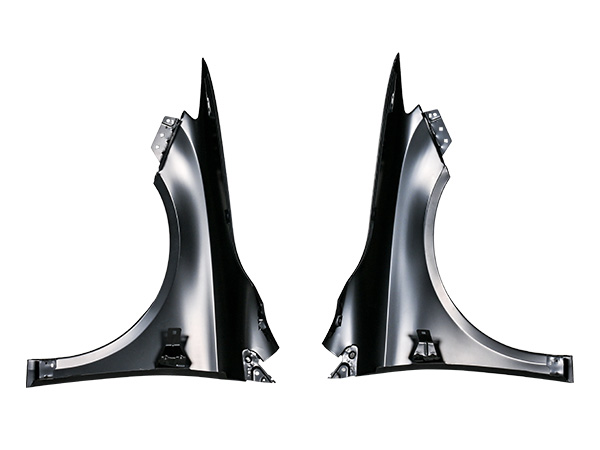
Automotive stamped parts are fundamental components in vehicle manufacturing, spanning critical areas such as body structures, chassis suspension systems, and exterior trim. Their surface treatment processes—which directly determine the vehicle's corrosion resistance, aesthetic quality, and service life—constitute an indispensable stage of production. Common surface treatment processes for automotive stamped parts fall into three main categories: protective/anti-rust, decorative, and functional reinforcement. Specific applications are detailed below:
Protective and anti-rust processes are the most common surface treatments for automotive stamped parts; their primary function is to prevent metal corrosion and extend component lifespan. The first is cathodic electrophoretic coating (e-coating), currently the mainstream process for automotive body sheet metal. It utilizes an electric field to deposit charged coating particles, creating a uniform, dense layer. This method offers excellent coverage—particularly on corrosion-prone areas like edges and weld seams—and is suitable for core body components such as doors, inner hood panels, and chassis frame rails. Its salt-spray corrosion resistance far exceeds that of standard painting, making it a cornerstone of the vehicle's anti-rust system. The second is hot-dip galvanizing, a process in which stamped parts are immersed in molten zinc to form a protective iron-zinc alloy layer. This method yields a thick coating with stable anti-rust performance and is commonly used for high-strength chassis structural parts, wheel fasteners, and exhaust system brackets. While less costly than electrophoresis, the resulting coating is thicker, requiring care during subsequent processing to prevent friction-induced coating detachment. The third is phosphating, a fundamental pre-treatment step prior to painting. Through a chemical reaction, it forms a phosphate conversion coating on the metal surface, enhancing the adhesion of subsequent coatings while providing additional rust protection. Suitable for various inner body panels and sheet metal stampings, it is a necessary precursor to electrophoresis and electrostatic spraying.
Decorative processes focus on enhancing the visual quality and aesthetic appeal of components and are primarily used for exterior or interior stamped parts. The first method is electrostatic spraying, which uses high-voltage static electricity to charge coating particles so they adhere to the workpiece surface; a coating is formed after heat curing. This process offers a wide, adjustable color range and can achieve various finishes, such as matte or metallic luster. It is commonly used for interior components like center console frames and door trim strips, as well as exterior parts like intake grille frames, offering good wear and weather resistance. The second method is decorative chrome plating, which involves depositing a thin layer of chromium over a nickel base to create a bright, mirror-like finish. Corrosion-resistant and refined in appearance, this process is frequently used for exterior stamped parts such as door handles, window trim, and wheel arch moldings; while it significantly enhances the vehicle's sense of luxury, it entails higher costs and carries a risk of brittleness associated with thick chromium layers. The third method is powder coating, which uses solid powder as the raw material; the powder adheres via static electricity and cures into a film through heating. This process emits no organic solvents, offers excellent environmental performance, and ensures uniform coating thickness. It is widely used for stamped components like wheel hubs and chassis brackets, providing outstanding scratch resistance, with some customized products capable of achieving special color effects.
Functional enhancement processes are designed to meet specific performance requirements and are suitable for high-strength stamped parts or those subjected to demanding operating conditions. A prime example is Dacromet treatment, which involves applying and heat-curing a zinc-aluminum-chromium composite coating. This method eliminates hydrogen embrittlement issues, offers five to ten times the corrosion resistance of traditional galvanizing, and provides superior heat resistance. It is commonly used for components sensitive to hydrogen embrittlement—such as high-strength bolts and suspension stampings—serving as an eco-friendly alternative to traditional galvanizing. Additionally, blackening (or black oxide) treatment creates a black oxide film on the surface of carbon steel stamped parts through chemical oxidation. This process is simple and cost-effective, making it suitable for small, non-load-bearing stamped parts and fasteners; while its corrosion resistance is moderate, it meets basic protection needs for secondary components.
In summary, each surface treatment process has distinct characteristics, and the choice of treatment for automotive stamped parts depends on a comprehensive assessment of the component's location, performance requirements, and cost. As demands for vehicle lightweighting and environmental protection increase, the adoption of eco-friendly processes like Dacromet and powder coating is steadily expanding.



 WhatsApp
 Phone
Phone Email
Email Message
Comment
(0)