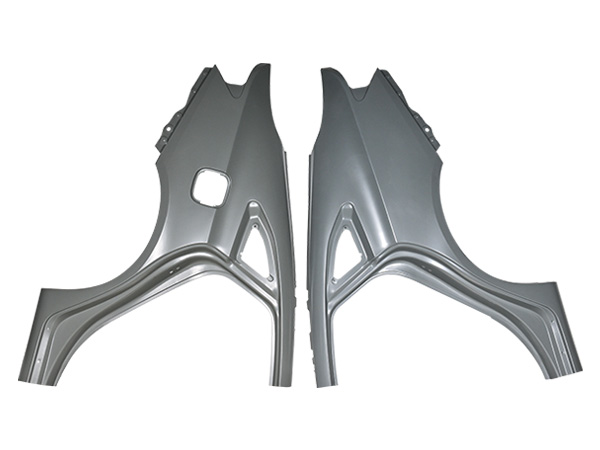
Automotive stamped parts are fundamental components of the vehicle body, chassis, and powertrain systems. Their material properties directly determine critical vehicle metrics such as safety, lightweighting, and durability; consequently, the appropriate selection of materials is a core aspect of the design and manufacturing process.
The primary categories of sheet metal used for automotive stamped parts include: first, cold-rolled low-carbon steel sheets (e.g., the DC series, such as DC01 and DC04), which are the most widely used; characterized by high dimensional precision, superior surface quality, and excellent formability, they are ideal for complex shapes and serve as the standard material for body panels, floor pans, and door sills. Second, hot-rolled steel sheets (typically grades Q235 and Q345 with thicknesses of 3mm or greater); offering high strength and low cost, they are suitable for structural components that bear significant loads but have moderate forming precision requirements, such as frame longitudinal rails, crossmembers, and chassis brackets. Third, coated steel sheets (including hot-dip galvanized and electro-galvanized types, such as DX51D); their key advantage is excellent corrosion resistance, making them widely used for components prone to moisture or corrosion—such as inner door panels, fenders, and fuel tanks—thereby significantly extending service life. Fourth, high-strength and ultra-high-strength steels (HSS/UHSS), such as DP steel and boron steel; with tensile strengths ranging from 500 to 1500 MPa, they combine high strength with low weight, aligning with the trend toward automotive lightweighting, and are frequently used in safety-critical components like crash beams and A/B pillars. Fifth, light metal sheets (aluminum and magnesium alloys); with densities only one-third to one-quarter that of steel, they meet the weight-reduction needs of new energy vehicles and are increasingly applied to components such as hoods, doors, and suspension control arms. The selection of materials for stamped parts must adhere to four core principles: First, process compatibility—prioritizing stamping formability. Deep-drawn components (such as fenders with complex curved surfaces) require deep-drawing grade cold-rolled steel (e.g., DC04) to prevent cracking or wrinkling during forming; structural parts subject to heavy loads must balance strength and ductility, utilizing hot-rolled or low-alloy high-strength steel to ensure adequate formability. Second, performance matching—selecting materials based on the component's functional role. Ultra-high-strength steel is prioritized for safety-critical structural parts to balance crashworthiness with lightweighting; coated steel is selected for parts requiring high corrosion resistance; and lightweight metal sheets are preferred for new energy vehicles to meet stringent weight-reduction targets. Third, economic balance—prioritizing the most cost-effective materials that meet performance standards. Standard chassis brackets do not require expensive ultra-high-strength steel, as Q235 hot-rolled steel suffices; standard-grade cold-rolled steel (e.g., DC01) is used for non-critical decorative panels to reduce manufacturing costs. Fourth, process synergy—ensuring materials are compatible with downstream processing. For welding, galvanized steel requires processes that resist weld-spot corrosion, while high-strength steel necessitates specialized welding equipment; the painting process requires material surfaces suitable for electro-coating and painting, ensuring surface defects do not compromise the finish.
As the automotive industry shifts toward electrification and intelligent technologies, material selection for stamped parts must continue to balance traditional performance requirements with the specific needs of new energy vehicles. By effectively balancing manufacturing processes, performance, and costs, manufacturers can enhance overall vehicle quality.



 WhatsApp
 Phone
Phone Email
Email Message
Comment
(0)